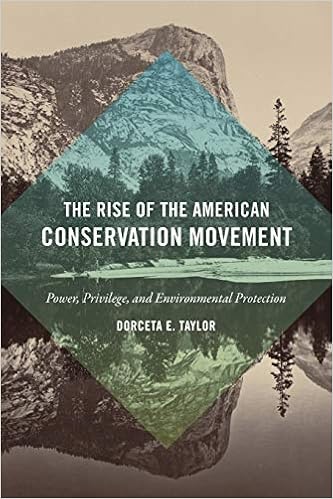
Twelve Take-Aways from Dorceta Taylor’s Rise of the American Conservation Movement: Power, Privilege, and Environmental Protection

Part One

The Rise of the American Conservation Movement: Power, Privilege, and  Environmental Protection: Taylor, Dorceta E.: 9780822361985: Amazon.com:  Books

Where do I even begin with this book? It is absolutely a must-read for anyone in the environmental science and policy fields. I did not want to attempt reviewing or adding any thoughts to the book so I decided for this post to summarize twelve things that I learned and found impactful in this book with the hopes it will encourage at least one other person to read it. First and foremost, Taylor’s writing is phenomenal—I read this book as easily as I would my favorite novel. I cannot praise this book enough.

Summary: Dorceta Taylor presents a well researched history of the American conservation movement’s origins, weaving in the interactions of race, class, gender, and immigration status with environmental policy and the conservation movement. She tells the seemingly forgotten stories of women and people of color in the environmental movement that has since its origins been dominated by privileged white men. I am going to break this summary up by chapter to provide an overview of the topics Taylor dives into in this work.

Chapter I: Key Concepts in Informing Conservation Thought

            This chapter sets the stage for the rest of the book; Taylor defines key concepts that will aid the reader in understanding the often complex topics Taylor discusses. I knew this book was worth the purchase when I came across a concept I have never heard of before—internal colonialism. Internal colonialism is the exploitation and experiences of minority groups (internal colonies) at the hands of the majority group within a nation. Many of the same processes of external colonialism are at play in internal colonialism; “Economic dependence of the internal colony is reinforced by legal, political, and military measures.” An example of this that Taylor discusses is the relationship between Native American reservations and the U.S. government.

Chapter II: Wealthy People and the City—An Ambivalent Relationship

            In this chapter Taylor describes the conditions of urban cities that served as an “Impetus for Change” (that is what this part of the book was titled) for urban elites seeking escape from American cities—disease, lack of sanitation, riots and civil unrest, overcrowding. What I found interesting in this chapter is that the earliest conservation efforts took place in urban areas with the establishment of city parks. Muir is typically associated with the formation of the American conservation movement, but these early efforts within urban spaces from the mid-nineteenth century are very different from Muir’s seeking of grandeur wilderness undisturbed by humans. I found this intriguing because I think there has been a return to these early ideas of making urban spaces greener. Urban spaces are not separate from the environment, they are their own type of ecosystem in a way and have great potential for the environmental movement.

Chapter III: Wealth, Manliness, and Exploring the Outdoors

            Taylor describes two types of men exploring the outdoors in this chapter; transcendentalists, and the more adventurous frontiersmen seeking excitement from their interactions with nature. Were transcendentalists the original cottage core? It seems so. People like Emerson and Thoreau praised pastoral life for its simplicity and charm, leading to an increased emphasis on making farms and country estates more attractive. On the flip side, some men asserted their masculinity by taking to the frontier for sport and adventure. People like Theodore Roosevelt extolled the benefits of exercise on the rugged frontier and hunting for sport. Taylor does not say very much on the matter but I kept thinking of the ways both groups of men led to dangerous ideas of Native American people’s relationship with the land. Muir was not subtle in his beliefs that Native people were primitive and did not belong in the natural areas he wished to conserve despite them having been stewards of that land for generations. Hunting for sport also harmed Native people, most notably in the over-hunting of bison populations on the plains and treatment of Native people as if they were less than human.

Chapter IV: Wealth, Women, and Outdoor Pursuits

            For every man mentioned in the previous chapter, Taylor told the story of women doing the same work. It is not often discussed, but women were also nature illustrators, landscape painters, adventurists, naturalists, botanists, miners, etc. alongside their male counterparts. I do not have much to say about this chapter other than I learned about a lot of women whose stories should be told in addition to Muir, Audubon, Thoreau, and Emerson.

Chapter V: People of Color—Access to and Control of Resources

            My take away from this chapter is that two important women of color we all learn about in history class are not talked about nearly enough—Sacagawea and Harriet Tubman. Of course, anyone who paid attention in history class knows their story but I feel like what they both did is not emphasized enough because only recently in learning about them did I understand the scale and gravity of their feats. Both of them undertook incredible journeys that rivaled and surpassed any male adventurer. They both relied on their intimate knowledge of the land to guide themselves and others safely across the country and, in Tubman’s case, extremely perilous conditions due to the illegality of her heroic actions. The relationship enslaved people and Indigenous people had with the land is not discussed enough in environmental circles (especially the former). That is finally starting to change, but I still see people acting as if Muir was the first person to ever go for a walk in nature; Indigenous people had extensive trade routes throughout the continental United States, there was no such thing as uncharted or untraveled territory when Muir decided to go on those journeys.

Chapter VI: Sport Hunting Scarcity and Protection

            This chapter was an overview of the establishment of hunting and fishing regulations. My main take-away from this chapter is that the divisions of class present in hunting back then is the same as it is now. Lower income, subsistence hunters were villainized as the reason for game scarcity and animals nearing extinction. Meanwhile, the same elite hunters that villainized subsistence hunters would casually write about the ways they over-exploited game, and bragged about possibly shooting the last individuals of species nearing extinction. That sounds somewhat familiar, doesn’t it? It makes me think of the way Indigenous people that hunt and fish in the traditional ways they have always used for subsistence, are often portrayed as greedy, barbaric, or wasteful. These false views of Indigenous people have led to conflicts over natural resources for decades, more recently in Nova Scotia with the lobster fishery. Non-Indigenous commercial fishers used violence to intimidate and harm First Nation fishers, accusing them of overharvesting, despite the fact First Nation fishers make up an absurdly small portion of fishers in that region.

I will continue this discussion in another post at a later date, I hope you enjoyed and thank you for reading!
Women’s History Month: Unsung Heroes in Environmental Movements

I can’t believe it is the middle of March already! This post is inspired by a presentation I prepared, but unfortunately did not have the chance to give, last year due to the Covid-19 pandemic. In my presentation, I was hoping to tell the stories of women in STEM that have often been overshadowed by their white counterparts whose stories are sensationalized by mainstream media. When you think of women who have gained fame through their science or environmental activism, the most common household names are Rachel Carson, Marie Curie, Jane Goodall, and most recently Greta Thunberg. (Disclaimer: This is not meant to bash any of the women mentioned previously, their work was very important! I am a scientist today because I absolutely worshipped my Jane Goodall VHS tapes.) The women who are missing from this narrative are the BIPOC women whose work also deserve to be celebrated, a few of which I will highlight here. The women I will be discussing in this post I chose because they have been inspirations to me personally and their work intersects with my interests. This is by no means meant to be an extensive list.

Dr. Mamie Parker

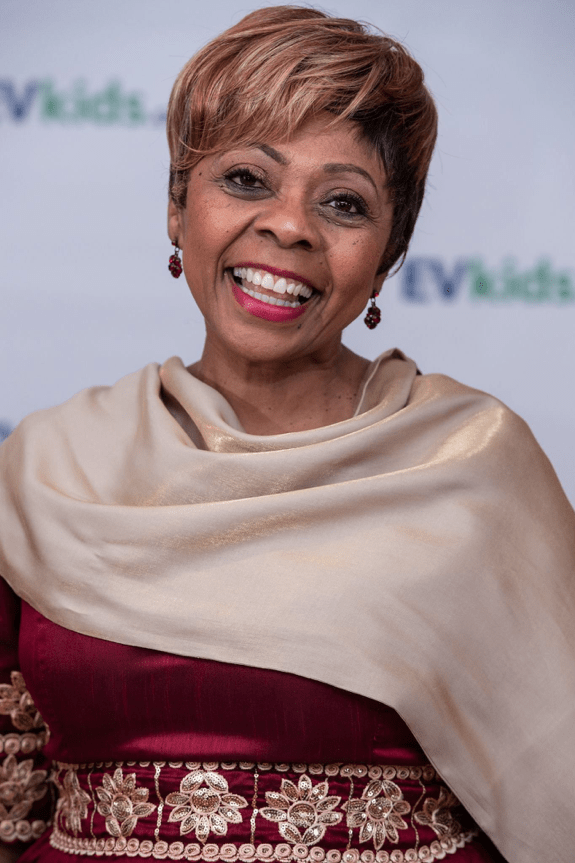
Dr. Mamie Parker is a biologist who has worked in the United States Fish and Wildlife Service for over thirty years. She is a pioneer in her field, and has held many titles within USFWS: Assistant Director of Fisheries and Habitat Conservation, Northeast Service Regional Director, USFWS Chief of Staff and Chief of Fisheries. She has been awarded the Presidential Rank Meritorious Service Award, and the Emmeline Moore Prize from the American Fisheries Society. She has dedicated her career to conservation, and also promoting greater diversity and inclusion in fisheries science.

Now retired, she is still inspiring others through public speaking and mentorship. I first learned about Dr. Parker just last month when I was attending the University of Washington’s School of Aquatic and Fisheries Science prospective student day (virtually). After being interested in fisheries management and promoting diversity in STEM for so long, I was shocked that I had never even heard of her before. I am so honored to be able to attend her talk and learn from her experiences in fisheries science. Her speech was so moving as she discussed her career path, and also the aspects of her life that she sacrificed for her career. It was very inspiring to hear her story, and also encouraging to be told from somebody as monumental as her the importance of a work-life balance. Dr. Parker does not get nearly as much recognition as she deserves for her dedication to the field of fisheries science and conservation.

Dr. Dorceta Taylor

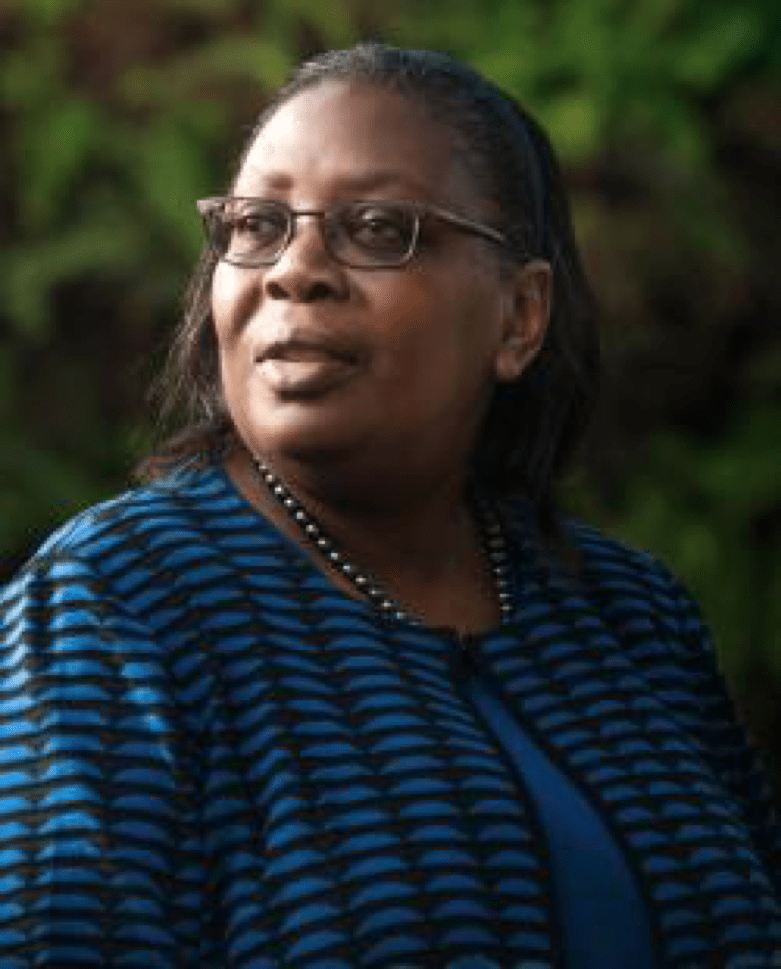
Dr. Taylor is an environmental sociologist who has studied and written about a wide array of topics such as environmental racism, environmental justice, environmental policy, food insecurity, environmental privilege, and the intersections of race and gender in the environment. She is currently the Director of Diversity, Equity, and Inclusion at the University of Michigan’s School of Environment and Sustainability. Like Mamie Parker, Dorceta Taylor has also been a champion for promoting greater diversity in environmental fields. Dr. Taylor has written a series of three books about environmental racism, justice, and policy: The Rise of the American Conservation Movement: Power, Privilege, and Environmental Protection, Toxic Communities: Environmental Racism, Industrial Pollution, and Residential Mobility and The Environment and the People in American Cities, 1600s-1900s: Disorder, Inequality and Social Change.

Dr. Taylor is another unsung hero that I only recently discovered through social media. I wish I had learned about her sooner because her work has been extremely influential to my ways of thinking about human relationships to the environment, and I could have benefitted greatly from reading her work during my undergraduate years. Better late than never! I have read The Rise of the American Conservation Movement and am about to begin Toxic Communities. I hope to cover all three of her books in greater detail on this blog very soon because I think all of them have so much to offer and deserve recognition for their importance to the field of environmental sociology. In my opinion, they should be required reading for all students in environmental fields!

Winona LaDuke

Winona LaDuke is an Anishinaabe environmental activist known for her work on sustainability and food sovereignty. She has been involved in numerous projects and movements such as the White Earth Land Recovery Project, which focuses on reclaiming both land and traditional relationships with the land such as harvesting wild rice and other traditional foods, and revitalizing culture and language. LaDuke also founded Honor the Earth to promote Indigenous environmental movements working to address environmental justice issues such as climate change, the construction of pipelines including the Dakota Access Pipeline, renewable energy, and sustainable development.

I had the honor of meeting Winona LaDuke and hearing her speak a few years ago on my college campus. I was a terrified sophomore walking into a room to have lunch with probably one of the most powerful people I have ever and will ever meet (plus about twenty professors and graduate students, which made for not an intimidating situation at all!). I was so star struck I completely forgot to introduce myself, but that’s okay. It is alright to be a little socially awkward.

Thunder Hawk Madonna Showup2020

Madonna Thunderhawk

Madonna Thunderhawk is another amazing Indigenous civil rights activist that has dedicated her life to being a leader in the American Indian Movement, the Dakota Access Pipeline resistance, and organizing Women of All Red Nations, The Black Hills Alliance, and the Lakota People’s Law Project. She was involved in the occupation of Alcatraz Island and the occupation of Wounded Knee (please look both of these movements up if you haven’t heard of it, it is some pretty cool history that is not taught in the classroom), as well as two occupations of Mount Rushmore to protest the 1868 Treaty of Fort Laramie. In addition to her grassroots activism, Thunderhawk has done a lot of work with revitalizing culture through traditional education.

Thunderhawk is a champion for Indigenous rights, and specifically Indigenous women’s rights. I had the honor of meeting her two years ago as a part of an event I helped to organize. She and her daughter came to OSU for a screening of the documentary about her life and work called Warrior Woman. Afterwards they held a Q&A and Thunderhawk was so great to listen to. Her advice and answers to all of the questions were so powerful, I learned more from that thirty-minute Q&A than any Native American history class. I was so fortunate to have met her, and believe that she deserves more recognition for her role in Indigenous civil rights movements. Any discussions about the American Indian Movement is so male-dominated, but women such as Thunderhawk played a very important role as well, if not more so important.

Autumn Peltier

Autumn Peltier is an Indigenous (Anishinaabe) youth activist and water defender. She advocates for clean drinking water for First Nations peoples in Canada. In 2019 she was name Chief Water Commissioner for her tribe, and has continued her advocacy efforts throughout the Covid-19 pandemic, highlighting the ways the pandemic has further amplified the water crisis in First Nations communities.

“We can’t eat money or drink oil” – Autumn Peltier

Tokata Iron Eyes — Earth Guardians

Tokata Iron Eyes

Tokata Iron Eyes is another inspiring youth activist from the Standing Rock Sioux Tribe. She is most known for leading the Rezpect our Water campaign against the Dakota Access Pipeline, and has also participated in climate change rallies and movements. I look forward to seeing what comes next in both her and Autumn Peltier’s journeys in advocating for environmental justice.

I wanted to highlight two Indigenous youths, and I wish I could highlight so many other Black and Latinx youths fighting for environmental justice and their futures, because the common narrative of youths in environmental spaces is focused solely on Greta Thunberg, but she is not alone in the fight.

Louise Erdrich’s Future Home of the Living God: Speculative Fiction of Biological Crisis

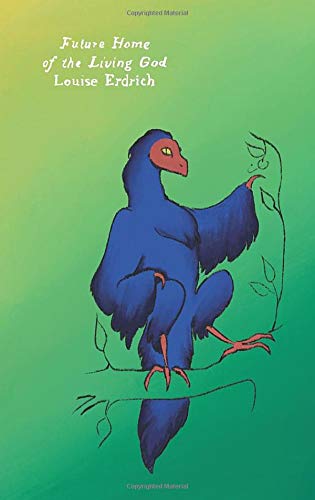
Future Home of the Living God: A Novel (Harper Perennial Olive Editions):  Erdrich, Louise: 9780063036680: Amazon.com: Books

My most recent read is Louise Erdrich’s Future Home of the Living God. It was an impulse purchase because I loved the cover and it seemed, from the startlingly unfamiliar picture of the bird on the cover, that it was going to be different from previous works of hers that I have read.

The story seems fairly normal at the onset. You follow the main character Cedar, who is a young Native American woman who was adopted outside of her community, as she attempts to learn the truth of her family history and locate her birth mother. The separation of Indigenous children from their parents by placing them in boarding schools and later on into white homes was a deliberate attempt by the government to erase Indigenous culture by assimilating Native children to Anglo-American society. Near the end of the twentieth century action was taken to prevent Native children from being adopted into non-Native homes. The fact that this book is set in a contemporary setting gives both Cedar, and the reader, reason to question the ethics of her adoption. As the novel continues however, there are hints that this world is not anything like our current America; there are mentions of evolution reversing in non-human species, and the panic escalates as it is made apparent that the sudden evolutionary changes are inevitably going to affect the human population as well. Cedar is in an especially vulnerable position, but I do not want to spoil anything more than that because what I enjoyed most of this book was all of the bizarre twists and turns that it took. In summary, it was Annihilation meets The Handmaid’s Tale and I loved it.

The reason I wanted to feature this book on this blog is because I am starting to dive into speculative fiction and other ways climate change or environmental science pop up in popular culture. While the science is of course not good and highly exaggerated in this book, it painted a very vivid picture of how our society might respond to a catastrophe such as this. The author’s perspective as an Indigenous woman is especially intriguing because of the way she weaves historical infringements on Indigenous women’s rights, specifically reproductive rights, into the contemporary setting in a horrific way.

Novels that center environmental issues are so important to communicating to the general public. No, Louise Erdrich is not a scientist, and no, evolution is not going to spontaneously reverse (at least I hope not) but it definitely got me thinking about how society responds to natural disasters outside of our control. It is often “too little, too late” or “let’s wait until after something bad happens to us to do something”, and that is what appears to have occurred in this novel. I appreciate any novels that blend environmental issues and social injustice, as the two go hand in hand. Climate change, like the conflict in this novel, is going to upend our world and change the ways we live drastically, how will our society respond? So far it has been a rocky road and we are only at the base of the mountain we have to climb in order to adapt and mitigate climate change.

I really do not have anything negative I could say about this book, other than I want to know more about how the world got up to the point of where the story began! There are many startling descriptions of how the evolutionary reversal is playing out in the world around Cedar, but I wish there was more. In general, I wish there was even more world building because what Erdrich does present is phenomenal. I would highly recommend this book to anyone interested in dystopian or post-apocalyptic literature. I am hoping to find more fictional literature that explores topics such as environmental issues, or speculative fiction that is set in a post-environmental disaster world. Books and articles about climate science are not accessible to a large portion of the general public for a variety of reasons, but books such as this are a good way to relay to readers the devastating impacts of environmental disasters that can and will disrupt our current ways of living, and the sense of urgency to take action against them.

A Return to Blogging

Hello and welcome to my page. I haven’t posted on this blog for some time, and I think it is time I return. I have been working at the Cincinnati Children’s Hospital Medical Center as a lab technician in the PCR lab. I primarily was doing COVID-19 PCR testing, which is why I have been absent from this blog. As COVID began spiking throughout October, November, and December, my lab was running thousands of Covid tests every week. I was working sixty plus hours every week, including most weekends and it was the worst type of burn out I have ever felt. My life revolved around Covid. Finally things have slowed down, I have received both doses of the vaccine, and I feel mentally prepared to return to my other interests.

Another piece of good news is that I was accepted to my dream graduate program after two years of applying! I will be moving to Seattle next fall with my partner to attend graduate school at the University of Washington. I will be in the School of Aquatic and Fisheries Science for my master’s program, and am hoping it will lead into a PhD eventually. I am beyond excited to commit myself to research and continue my education. I am counting down the days to September, and in the mean time I have a big move to plan.

The one thing I have remained dedicated to throughout the pandemic, increasingly so when I was busy at work, is reading. I have been reading everything I can get my hands on and have decided to make it a part of this blog. I want to discuss the books I read and how they relate to my passion for environmental science and science communication. Some books I am looking forward to discussing are Rebecca Roanhorse’s Trail of Lightning and Dorceta Taylor’s series that includes Toxic Communities and The Rise of the American Conservation Movement, among others.

That is all I had to say for now, over the course of the next week I will be attempting to reorganize my page to accommodate these changes, as well as return to posting more regularly. I am aiming to post twice a week, but I am still working full time and Covid test volumes are still pretty high. The pandemic is far from over but the last few weeks of having fewer positives and tests overall has given me reason for hope.

White Supremacist Attacks on Mi’kmaq Lobster Fishers in Nova Scotia

Hello, it has been a while since I posted because working in a COVID-19 testing lab during the COVID-19 pandemic has been a bit exhausting. I also have been busy finalizing my application for the NSF GRFP that was due this weekend.

I have been meaning to write a post on this topic for a while now, but hesitated because not being from Canada I did not have the knowledge or historical context to really speak on this topic before doing a lot of research beforehand. And First Nation people should of course be centered in discussions on this issue so this post is also a way to amplify their voices. As tensions have escalated this week however, I have become increasingly frustrated that I have not been as vocal on the issue as I would like to be. As someone who wants to study fisheries management and would like to work with Indigenous communities in the future, it is my responsibility to be informed on these things and denounce the racism that has been directed towards Indigenous fishers that are simply trying to exercise their treaty based right to fish. So while I cannot and (should not) speak on this specific matter not being Mi’kmaw or Canadian, I do want to talk a bit about the ways resource management and the conservation movement itself often exclude Indigenous perspectives, encroach on the rights of Indigenous people, and how that relates to white supremacy, as evidenced by the ongoing events in Nova Scotia.

I am also going to say in advance I am sorry if I spelled any words wrong, or any info in the next two paragraphs is incorrect, I tried my best to piece together all of the information I have read on this over the last couple of weeks.

            A bit of background on the events in Nova Scotia: tensions have escalated in recent months between non-Indigenous lobster fishers in Nova Scotia and Mi’kmaq fishers (fishers is a gender neutral term to use instead of fishermen). The Mi’kmaq according to the Peace and Friendship Treaty of 1752 have the right to hunt and fish their lands and establish trade. This treaty based right was further defined by a 1999 Supreme Court of Canada ruling that determined the Mi’kmaq and Maliseet have not only the right to hunt and fish in order to sustain their community, but also the right to hunt and fish in order to earn a moderate livelihood, including in the off-season.

            Fast forward a bit to today, and non-Native fishers control over 99% of the lobster fishery in Nova Scotia. As a comparison, in St. Mary’s Bay the Sipekne’katik has issued 11 fishing licenses total that allow 50 lobster traps each. Non-native fishers on the other hand have 979 licenses that allow up to 400 traps each. However, non-native fishers have been directing violence towards First Nations fishers as an act of “protest” in the name of conservation. Blatantly racist attacks towards Indigenous fishers such as cutting lines, shooting flares at boats, and denying services to Indigenous fishers have escalated this week to threatening to set fire to a lobster pound while to First Nations men were inside, unless they turned over their catch. This resulted in the RCMP doing absolutely nothing, and thousands of lobster being either stolen or soaked in toxic paint thinner. A van was set on fire, and I think I saw an image of a boat that had been destroyed, and the lobster pound itself was later set on fire.

(All of the information above came from @AgentNDN on Twitter and @Kukuwes)

            This is not a conservation issue. This is not a lobster issue. This is a violent act of white supremacy meant to intimidate and harm Mi’kmaq fishers so that they do not practice their right to fish and hunt their own ancestral land.  This is not an isolated incident either. Similar encroachments on Indigenous fishing rights have occurred in the Great Lakes regions, the Pacific Northwest, and more. In addition to the violence in Nova Scotia, the Algonquin of Barriere Lake have established a moratorium on moose hunting for sport in order to protect the moose population in Quebec. They have faced threats and intimidation from non-native hunters as well, but protecting the moose is vital to the preservation of Algonquin traditions, culture, and way of life. I could spend all day listing the times non-native people have attempted to stop Native people from exercising their rights to hunt, fish, and manage their own land.

            It makes my head hurt to think of the illogical arguments used by non-Native people to justify the violence towards Native people exercising their rights. If non-Native people were truly concerned about conserving lobster they would not be pouring chemicals onto live animals. If they truly cared about the environment, they would look in the mirror and realize they have been stripping the land of its resources at an unsustainable rate for profit for far too long. People committing these violent acts on Indigenous people either do not know the history, the law, and the science that supports the First Nation fishers, or they willfully choose to ignore it in favor of greed and violence. I’m going to guess the latter.

The law states that Mi’kmaq fishers have the right to a moderate livelihood. Where is the disconnect occurring? Why does the blame for unsustainable harvesting of resources fall on the back of Indigenous people when the problem lies in the settler colonial, capitalist state that promotes over-consumption and over-harvesting of resources. Indigenous people have practiced sustainable harvest for thousands of years, and managed the land and waters of this continent since time immemorial. Why then, do they get pushed out of discussions of conservation and resource management?

A lot of this I have discussed in previous posts so I will be brief here. A false narrative of Indigenous people being unsustainable and ignorant of proper land stewardship has been perpetuated for centuries. When white hunters deliberately decimated the bison herds of the Great Plains in a violent attempt to eradicate Indigenous people, the finger was pointed to those same Indigenous communities that relied on bison for survival. As white people decimated forests across the United States and Canada for timber, the finger was once again pointed at Indigenous people who utilized controlled burns and other forest management strategies that did not fit European ideas of proper land management.

The conservation movement is so white washed that Indigenous people really have no place in it, unless it is to be a tokenized Disney-esque stereotype of “living in harmony with nature” that remains locked in an imagined pre-colonial history. White veganism specifically has often criticized Indigenous people that practice their traditional ways of life that include hunting, fishing, and harvesting of other animal resources.

Colonialism and capitalism has put our world in the situation it is in now. The overharvesting of natural resources, mismanagement of land, unsustainable agricultural practices, pollution, dependence on fossil fuels, etc., is the result of the colonial mindset of taking all the land has to offer until nothing is left. This is violence against Indigenous people. The blaming of Indigenous people for these problems is objectively wrong, and a violent act of erasure. Preventing Indigenous people from living traditionally, even in the name of conservation, is white supremacy and cultural genocide. The management of our lands and waters must at the very least include Indigenous perspectives, uphold Indigenous sovereignty, and protect Indigenous ways of life. A step further than this would be restoring the responsibility of managing land and resources to Indigenous people, because they have a deep connection with the land and wealth of traditional ecological knowledge that the settler colonial state cannot even begin to comprehend.

Please read more on this topic to stay informed, and please find other ways to support Indigenous land protectors, fishers, and hunters whether that is through monetary donations, political action, etc.

Mi'kmaq lobster fishery in Nova Scotia grows to 10 boats | Globalnews.ca

For more information please follow these accounts:

Twitter:

@agentNDN (has more accounts to follow in pinned tweet as well as other action items to support Mi’kmaq fishers)

@Kukuwes

@Mikmaq_star

@ArnallLabrador

@mgoogoo

@amberblueskye

Check out Jesse Benjamin’s blog post: https://www.melgignatfit.com/post/why-do-you-hate-us-so (She also sells really cool masks on her website!)

Also check out https://teespring.com/stores/ijotikak  All proceeds this month are going to support Mi’kmaq fishers.

What is a GMO?

A conversation with food scientist Jenna Fryer

Hello! I have been a bit M.I.A. because I started my new job as a lab tech at the Cincinnati Children’s Hospital. I will try to post more regularly from now on now that I’m used to working full-time again!

One of my goals for this blog was to highlight the work being done by other young scientists. My first guest is Jenna Fryer, one of my friends from Ohio State University and former roommate. Jenna was a food science major at Ohio State and is beginning a master’s program at Oregon State University (the other OSU) in Food Science and Technology. She has already had a lot of work and research experience in this field, with internships at Smucker’s and Pepsi, as well as undergraduate research experience through Ohio State.

Jenna’s interest in food science stemmed from her mother working in the industry, but it was ultimately the combination of her interests in scientific research, cooking and baking that led Jenna to food science. During her undergraduate years, Jenna became interested in how human senses influence food preferences, and how that could be measured and explored through research. Her project at Ohio State University specifically looked at how smell influenced engagement when participants of the study were given a sample to rate. In graduate school Jenna will be studying impact of forest fires and other natural disasters on grape harvests, and how it impacts consumers’ experiences with wine. The impact of forest fires on grape harvests will be studied using carbon tracing of carbon-13 in grapes to see how fires could affect grapes that will be used in wine making.

Like me, Jenna is also interested in science communication because she believes it is important for scientists to understand how to communicate with a general audience. Science communication in food science is a two-way street that helps both the consumer and scientist’s understanding, or as Jenna phrased it, “understanding food better through people and understanding people better through food.” She was the president of a student organization at Ohio State called Citation Needed, whose goal was to train young food and agricultural science students to be better communicators in order to bridge the gap between scientists and agricultural workers, and make everyone feel more connected to the food they eat.

Jenna is an expert food science communicator— everything I know about food I learned from her! Something that we have talked a lot about over the last few years is the lack of knowledge there is of food science among the general public, and how that can lead to mistrust. One example of this is GMO food. There is a lot of fear that GMO’s are unhealthy “Frankenfoods”, or made with harmful chemicals. Below is a conversation I had with Jenna last week to learn more about what a GMO is.

Me: What is a GMO?

Jenna: GMO stands for genetically modified organism, and broadly it is any organism that’s undergone genetic modification, including naturally occurring processes such as crossbreeding. GMO technology allows us to make food that is more desirable for consumers, and the biggest misconception is the idea that it is a “Frankenfood” when the reality is we’re seeing how one crop’s good traits can be transferred to another crop through a specific method such as crossbreeding. GMO’s just allow us to get the desired result much faster than through crossbreeding.

There are three main categories of GMO’s, one is to make GMO’s more resistant to pests. Another common misconception is that GMO’s contain pesticides, but it’s really natural traits that are harmful to pests. Pest resistant GMO’s are better for the environment because they make it so less herbicide is required to grow crops, so there is less run-off. GMO’s can also contain fortified nutrients, such as golden rice, which is fortified with beta carotene that can be converted to vitamin A in the body. Fortified GMO’s can be given to help communities that experience nutritional deficiencies and food insecurity. The third type of GMO is to modify a crop so that it grows in environments the crop doesn’t typically grow in, such as growing pineapples in upstate New York or in deserts to utilize land that would have otherwise been unusable.

Me: GMO’s can be really important to increase food production and security. Why is there still this fear of GMO’s among the general public?

Jenna: A lot of it is the media perpetuating the idea of GMO’s being “bad” when they can be the answer to increasing our food supply. Many people are food secure enough to make the choice to eat organic and “natural” foods, but healthy eating is a luxury. GMO’s can increase people’s access to healthy, nutritious foods. And a word on diets, there is no right or wrong diet. You just need to eat what feels good to you. There is no right answer beyond eating fruits and vegetables and other nutritious food, so there is no reason to shame people for what they eat and if it is organic or not. I recommend everyone watch Food Evolution to learn more about this topic.

Me: What impact do you hope your work has on food science as a field or society?

Jenna: I want to be able to understand consumers better and how to use food to understand their thought processes. Understanding food better through people and understanding people better through food.

Food Fun Facts from Jenna

  1. You cannot put fresh pineapple in jell-o because of its acidity.
  2. The only food that bounces like a rubber ball when ripe is a cranberry.
  3. The state vegetable of Oklahoma is a watermelon, which is not a vegetable.

To Gap Year Or Not To Gap Year

I never expected to take a gap year between undergraduate and graduate school. Years before I even graduated from The Ohio State University this past spring I had already come to the decision to not take a gap year. The idea of taking time off and not making “progress” was terrifying, and I did not want to stop working towards my goals. Getting that PhD seemed like the ultimate measure of progress, a sign that I had made it, so it was a little bit soul crushing when I did not get accepted to graduate school. I knew I had done everything right, but it was not meant to be. Partially it was my fault because I had only applied to one graduate program, but I knew it was the perfect program for me and I would not be satisfied any other way. When I received that rejection letter on May 2nd 2020, in the midst of a global pandemic and the worst job market since the Great Depression, my gap year officially began.

If I had to answer the question in the title in the first month of my gap year, I would have said “Hell no!”  I was bored, and I grieved for my missed opportunity of beginning a graduate program straight out of undergrad. I felt left behind because all of my friends had been accepted to their programs while I experienced rejection for the first time in my life. It took a huge toll on my mental health, my self-esteem, and even my relationship because I felt so worthless. I did not give myself any grace at first. I immediately jumped into the job application process the day following my rejection letter. I was not content with staying home with nothing to do because for the last eight or so years since I began high school, I always had something to keep me busy. I was not used to resting so figuring out what to do with myself when I did finally have time to rest was absolutely exhausting.

In total I applied to about a hundred jobs. I got rejected from five jobs, and the rest I never heard back from until two weeks ago when I finally got an interview. That then led to a second interview, and now I am due to start working at the Cincinnati Children’s Hospital in two weeks. The job offer came about six months into my unemployment, six months after having no income or even unemployment or stimulus money. It. Was. Terrible. Some days I felt so hopeless about my job prospects I began applying to Target, Walmart, and Kroger, but even they did not hire me. Fortunately I had the privilege of depending on my parent and my partner financially, but I was embarrassed. I viewed myself as a failure compared to many of my peers that continued to accomplish so much despite the pandemic and were moving on to graduate school in the fall. Finally within the last two weeks things have started to come together; I began meeting with a faculty member at the graduate school I had applied to, and I am beginning to work on an NSF GRFP application. I also have a start date for my job that I can look forward to.

However, it was not just these tangible things that allowed me to overcome my reluctance to take a gap year. I also made a lot of personal changes that allowed me to find comfort in having this time to mentally recover after finishing a strenuous four years of undergrad. I knew I was burnt out from school, but I did not realize how long it would take to get out of that slump. It wasn’t until three months after graduation that I felt motivated to pick up a book again or do something remotely academic that wasn’t Duolingo. I never took burn out seriously, but it’s real, people!

My gap year has been good for me in ways that will benefit me as I transition back to going to school. I focused my social media presence on activism work, which I hope to continue doing. I started this blog. I began working out consistently since the summer after my freshman year of college. I am playing tennis again for the first time in three years. I painted a pretty darn good picture of a blue crab. I find joy in little things such as going grocery shopping and cooking healthy (and sometimes not so healthy!) meals for my partner and I. We moved into a new apartment and I enjoy taking care of it and cleaning because for the first time I have my own space. Learning how to make the apartment feel like home and maintain it was really important after living in so many different places over the last four years, and constantly feeling like I was in transition. Overall I learned how to be happier after going through the motions during undergrad. I was happy then, but there was also a lot of negativity that I am working on getting rid of.

A lot of these life skills such as cooking, cleaning, and even establishing routines for skin and hair care are things I had neglected for years. Now I will be able to take them with me to graduate school and maybe it will help me feel less overwhelmed. Before I started cooking this summer, I ate a lot of fast food because I hated the idea of cooking after a long day at school and work, but now I know how to take better care of myself and even enjoy cooking. I also have the time to read those books that had been piling up in my room and on my “to-read” list for years. It had been so long since I had read a novel that wasn’t for school that I forgot how much I enjoyed reading. Having this time off has also been reassuring because I find myself missing research, so there is no doubt whether or not I had chosen the right career path.

Now if you were to ask me whether or not gap years are a good idea, my answer would be yes. At first I would say that my rejection from grad school had “put my life on pause” in a negative way, but now I view it positively. It means I have time to pause, evaluate how far I have come since beginning undergrad, and think about what comes next. I am happy to begin working so that I can have a reliable income and also help people through my work in a COVID-19 testing lab, but I’m glad I had this six month break since the pandemic began to focus on myself for a change. Being rejected from graduate school does not have to be a missed opportunity; a lot of people assumed I would not apply to grad school again, but I am not giving up. My goals are the same as they have always been, but now I can see that I definitely needed to take a break.

So should you take a gap year? I really don’t know. I believe everything happens for a reason so if you have to take a gap year unwillingly like I did, embrace it and make the most of it. You did not fail. If you want to go straight from undergrad to grad school, go for it. But first check in with yourself to see if you are ready, and really ask yourself if you need a break. There’s a lot of ways to make the most of a gap year. Unfortunately with the pandemic I cannot do my original plan of living out my Under the Tuscan Sun dream of running away to Italy for a couple of months, but I’m definitely going to be in a better place financially than I would have been without having the opportunity to work for a year. Only you can know when you’re ready to move on to graduate school, but everyone’s academic and career paths are different so do not stress over the timeline you created for yourself. If there is anything I have learned about science it’s that nothing ever goes according to plan so don’t expect it to, but learn how to be adaptable to change.

My REU Experience: Methods

Welcome back and thank you to those of you that liked my last post and subscribed! In my last post I left off on the first week of my 2018 summer internship with the South Carolina Department of Natural Resources through the College of Charleston’s Fort Johnson REU (Research Experience for Undergraduates) program. I had moved to a new city, came up with a research idea, designed an experiment, and now I was ready to begin putting my plan into action. Let’s go!

The goal of my experiment was to rear crab in a lab to test how male and female juvenile blue crabs respond to varying salinity (salt level) conditions by measuring growth rates over time.

I estimated that I needed about one hundred crabs for my experiment, but there was one problem. That is A LOT of crabs, and we specifically needed juvenile crabs less than three inches wide. I began by going out with the field scientists in my department a few times a week and helping them with their work. I would bring home any juvenile blue crabs we caught during our trawls of the tidal creeks around Charleston. After two weeks this method was not going very well. I brought home twenty crabs and all of them died. Now might be a good time to mention, I know not everyone agrees with doing experiments like this and I had reservations about this too. I had originally wanted to do a field experiment so that we did not have to capture live crab and rear them in a lab, but another way to think about it is that this work could be used to ensure healthy crab populations persist for generations to come. Also blue crab populations are not currently threatened.

After those initial two weeks of already intensive fieldwork, we decided to kick it up a notch and do a targeted approach to the creeks we found the most juvenile blue crab in. Four days a week we set out crab pots, trawled, and I even used nets to pick up ones I saw swimming near the surface. I figured out a system to keep them cool during transport and learned not to take the smallest crabs that would be less likely to survive the move to the wet lab. It was exhausting work, and I can write a whole post about fieldwork mishaps I experienced, but I enjoyed being on the water everyday and being busy. I even got to drive the boat sometimes!

Always wear your life jacket, kids!

During these fieldwork heavy weeks my normal schedule was to get up around 7 A.M. to eat breakfast and pack my bag for the day. I would be out by the boat at 8 to help load the equipment in. Then we would drive to wherever we were sampling that day and be on the water from about 9 A.M. to 4 P.M. It was really physical work because I would have to throw the crab pots out or bring them in by hand, and pull in trawls by hand, so I came home exhausted. I would eat dinner and work on my computer for a while. At 9 P.M. I would leave to help a graduate student with her research. We would bring big nets to docks around Charleston two or three nights a week and stay out until around 2 A.M. because she needed larvae samples for her project. It was a lot of fun and I was glad to help, but hearing that alarm going off a few hours after I got home was the worst feeling. But that’s what coffee is for! These crazy hours are something to consider when thinking about REU’s. I definitely did not have to work as much as I did, but I figured that is what I was there to do and I wanted to give back by helping the people who spent so much time helping me with my project.

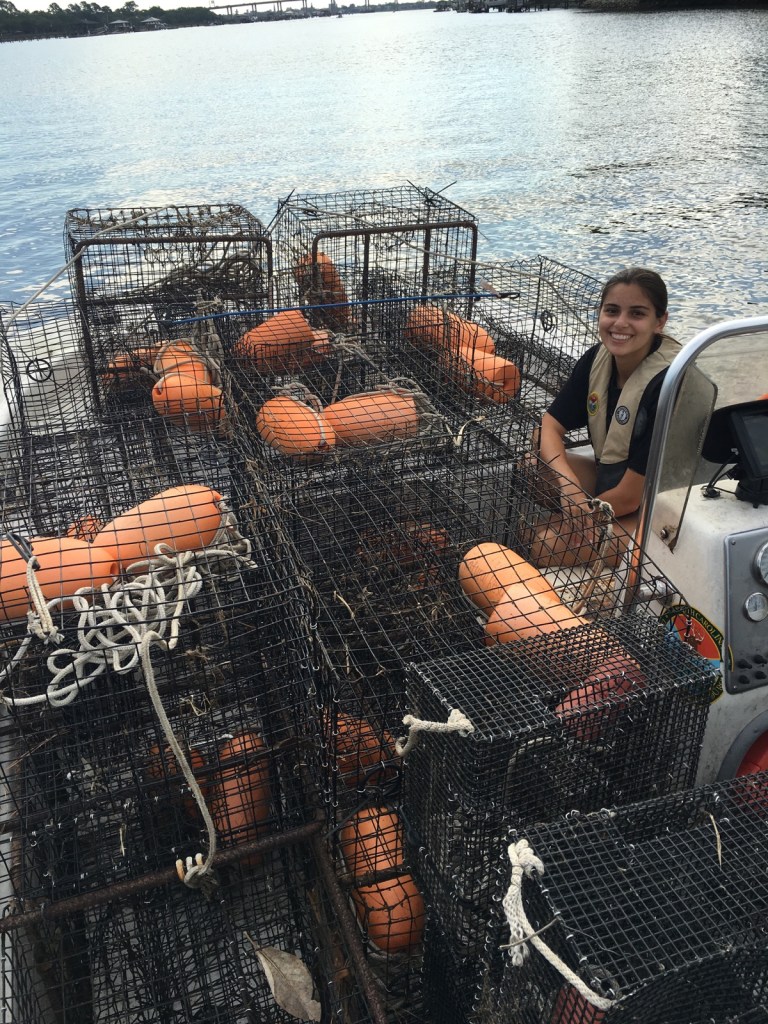
Just a young scientist and her crab pots. We baited these with menhaden, which smelled really bad after a day in the Charleston heat!

Getting back to the wet lab, I now had fifty crabs in their individual containers that protected them from each other and allowed me to keep track of individuals by numbering the containers. These containers were actually plastic Chinese take-out cups for soup that were cleaned and hole punched! Being resourceful was an important skill I learned here, because I had to figure out how to use what I had around me in creative ways. It was fewer crabs than I had hoped to collect, but I needed to begin my experiment so that we had enough time to measure the crab’s growth. I spent a whole afternoon running random number generators to assign the crabs to one of the sixteen tanks I had set up so that the males and females were evenly divided among the two different experiment conditions: high salinity and low salinity. I ended up with two males and one female in each tank, except for two that had two males and two females.

How I ran my experiment

Once the crabs were in their appropriate tanks the waiting began. I had a weekly and daily schedule for my experiment to make sure I was keeping track of the data I needed for my paper, and taking good care of the crabs. Developing and following this schedule was super important because doing good science requires diligence and consistency. Especially in a laboratory setting, you have to control what you can about the experimental conditions to eliminate other factors that could potentially affect your results.  For example, the sixteen tanks were divided onto four racks that had a top shelf and bottom shelf. I would make sure I had a high salinity and low salinity tank on each shelf to account for variations in light that may result from the top shelves blocking the overhead lights from reaching the bottom shelves.


Every morning I would put food pellets in their containers and feed them to satiation. I did this by putting five pellets into each container, and if one of the crabs ate them all I would add more. In the afternoon I would return and see who still had food left in their containers and I would remove it so that it did not make the water and tank dirty. Every two or three days I would use pH strips to test the water and make sure it was at a healthy level. There were also temperature logs in each tank measuring the temperature constantly throughout the experiment. At the beginning of every week I would do a half water change. I did this by siphoning out half of the water from each tank with a hose into the drain, and then pumping water from one of two garbage cans I had set up with water at the proper salinity levels. One was the “low salinity” water at 5 ppt (parts per thousand) and the other was the “high salinity” water at 15 ppt. I had to make it by mixing salt in by hand with a paint stirrer taped to a broom handle. The water changes were definitely the most work because the hoses and water pump could be heavy when I was tired from field work, and it took almost all day to complete. It was necessary though because having clean water for the crabs allowed them to stay healthy and not let gross algae build up on the sides and bottom of the tanks.

Friday was the most important day. I would take all of the crabs, tank by tank, to another lab down the hall that had a small scale and calipers. I would get the wet weight of all of the crabs and record it. The wet weight is just a measure of an aquatic organism’s weight without going through the process of drying it out. Then I would use the calipers to measure the length, width, and height of every crab and record that. Then the crabs would go back to their tanks and I would enter all of that data into an excel file. Whenever a crab molted I noted the molt event in my notebook and would use the calipers to measure its dimensions too because when they molt that means they grew larger and needed to make a new shell. I did this for five weeks because at the end we used the wet weight and changes in body dimensions to see how much the crabs were growing. More on how I did this will be in the next post!

My wet lab set up. Note the garbage cans in the bottom left. The first two shelving units of tanks were mine. Each one had three or four crabs in them, a sponge filter that also oxygenated the water.

After five weeks of caring for my little crab babies, it was time to wrap up my experiment. The crabs were stored in a freezer with labels in case they are needed again in the future. I was really upset that I could not release the crabs, but since they were in aquariums and in contact with me they could have picked up diseases that we do not want getting into the wild population. Although it was difficult, I hope the results of my study can be helpful in some way because as I will discuss in a later post, they were relevant to the issues populations may face due to changing environmental conditions as a result of climate change.

I am really happy with the work that I did during this period of my internship. It gave me a ton of fieldwork experience and chances to help with other projects not related to my own, as well as laboratory experience. It was a good balance for me because I love getting outdoors and Charleston’s estuaries are beautiful, but fieldwork is also very time consuming and demanding. The laboratory portion of my project was great for when I needed more time indoors to work on my writing and data entry and analysis.

Up next will be a post about what I did to go from raw data to results to full fledged manuscript all in the span of a week!

My REU Experience: Introduction

(This is going to be a multi-post story so stay tuned for more!)

Blue Crab Facts
Blue crab (Callinectes sapidus)

In the summer of 2018 I completed an REU (Research Experience for Undergraduates) with the College of Charleston in South Carolina. I was in the middle of my sophomore year at the Ohio State University ready to spread my wings, move to a foreign place, and try something new. Well… study abroad trips are expensive so I went with the next best option—South Carolina. I had already had a tiny bit of research experience, but wanted more, so I went online and found the NSF Research Experience for Undergraduates website. There they have a huge overwhelming list of summer research programs in all STEM fields all across the country. I had no idea what I wanted to study, but marine biology was always something I was interested in when I was younger. I thought now would be a good time to satisfy that childhood curiosity so I selected a few marine science focused REU’s on the east coast. I submitted my applications that winter and totally forgot about them until months later when I received my acceptance letters from Charleston and another program in Massachusetts. (I chose Charleston because it would be warmer!)

My family was nervous sending me off on my own to a different state and I was nervous myself because I felt so unprepared. The next couple of months were a blur; I packed and repacked and read papers written by the advisor I had been assigned to based off of my interests in ecology, because it felt like the only thing I could control until I began the program. I did not know what to expect because I did not receive any information prior to starting the program except for an address to the dormitory building and a date to arrive by. When the day came to drive the ten hours to Charleston, I was not nervous anymore, but excited to be on my own in one of my favorite cities.

Within the first two days I met my supervisor at the Department of Natural Resources, and we spent a lot of time in his office talking about possible research projects. He worked on crustaceans so I got to choose between studying shrimp and crab. I personally think shrimp are kind of creepy looking, so I chose crab. And who doesn’t love crabcakes?? I was quickly overwhelmed by the idea of having to come up with my own independent research project. Many of the other students’ supervisors already had projects planned upon arrival, so it was very frustrating at first and I was not confident in my ability to come up with a novel research idea. On top of this I was trying to get to know my housemates and learn how to live independently in a new city. Looking back I really appreciate the freedom my supervisor gave me because it forced me out of my comfort zone; I had to be independent, learn how to design my own experiment, and learn how to ask good questions that would move my project in the right direction.

How I came up with a research idea

On the first day of my internship, my supervisor gave me a stack of papers on blue crab and told me to go to the library and not come back until I had a couple of ideas to work with, so I did just that. I spent all day reading paper after paper, taking notes and writing down questions that came to mind. The note-taking method that works for me when reading papers is to write down any important new information from the intro, significant results, and the author’s explanation of the results. I always recommend taking handwritten notes or typing them to make an annotated bibliography because then you can make sense of what you read and how everything ties together. It is also nice to have clear, organized notes on every paper you read because then you can remember where information came from when you need to go back to it. It is so much easier to look at an annotated bibliography than dig through a stack of papers or files on your computer looking for that one sentence you need to cite. I learned that trick from a Greek mythology class so never believe what people say about GE humanities courses being irrelevant!

One study that was done in the 1970’s caught my eye; the researchers did a field experiment where they measured blue crab growth rate over time and they noted a significant difference between male and female blue crab. Why would that be? I followed that lead and found more recent papers that made similar observations and talked about the differences between male and female blue crab physiology and behavior. I found out that male and female blue crabs occupy different habitats as adults; females go to the open ocean to spawn while male crabs remained in tidal streams that were closer to freshwater. This sexually dimorphic migration pattern also matched the results of the previous studies showing females growing better in high salinity (salt concentration), and males in low salinity. Unfortunately and fortunately there was not much prior research done on this topic, especially in South Carolina. I say unfortunately because there was not a lot of existing information to work from, and fortunately because that meant I had a clean slate to work on my own project and whatever I did would end up being new.

The next morning I took my idea to my supervisor and he told me to go to the library again to work on an experiment design that could answer that question. I knew I had sixteen aquariums to work with in the wet lab so I designed an experiment to test how male and female blue crabs would respond to varying salinity levels. I ended up using methods similar to the 1970’s study, but instead of being in a natural setting it was in a laboratory. Half of the tanks would be high salinity conditions, half would be low salinity, and I would divide the male and female blue crabs evenly across all of the tanks. The next day I worked on cleaning the aquariums, filling them with water, and adjusting the salinity levels. By the end of week one of my internship I was ready to begin my experiment. All I needed now was some crabs!

The Covid-19 Pandemic’s Plastic Problem

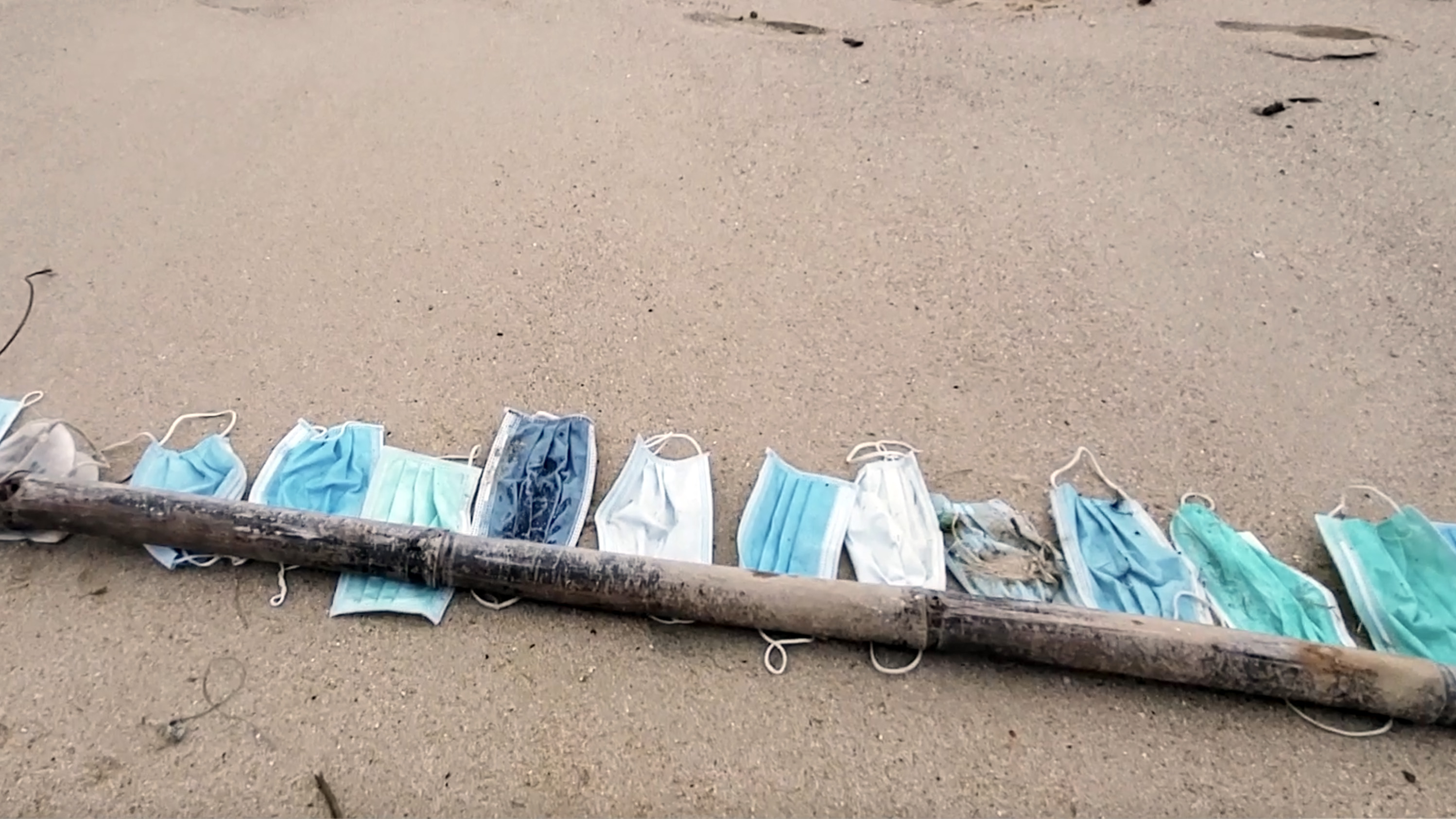
Could COVID-19 worsen the global plastic waste problem? - CGTN
Disposable masks found on beach (source: https://news.cgtn.com/news/2020-04-23/Could-COVID-19-worsen-the-global-plastic-waste-problem–PJmOzLhZYY/index.html)

Since the Covid-19 pandemic began so much has changed. Our daily lives are far from “normal” with having to isolate, work from home, and wear masks in public. Many of these lifestyle changes while necessary, do have negative environmental consequences, such as the increased use of disposable masks, rubber gloves, hand santizer sold in plastic bottles and other plastic items that we might normally be able to cut back on using. An example of this is that for the first time in two years I have to use plastic produce and grocery bags at the store. Our local store had not been allowing reusable bags and I want to continue following those guidelines until the end of the pandemic. These protective measures are helping to flatten the curve and keep us healthy during the pandemic, but our increased use of disposable plastic products is causing an increase in plastic waste and litter.

So what is the problem with this?

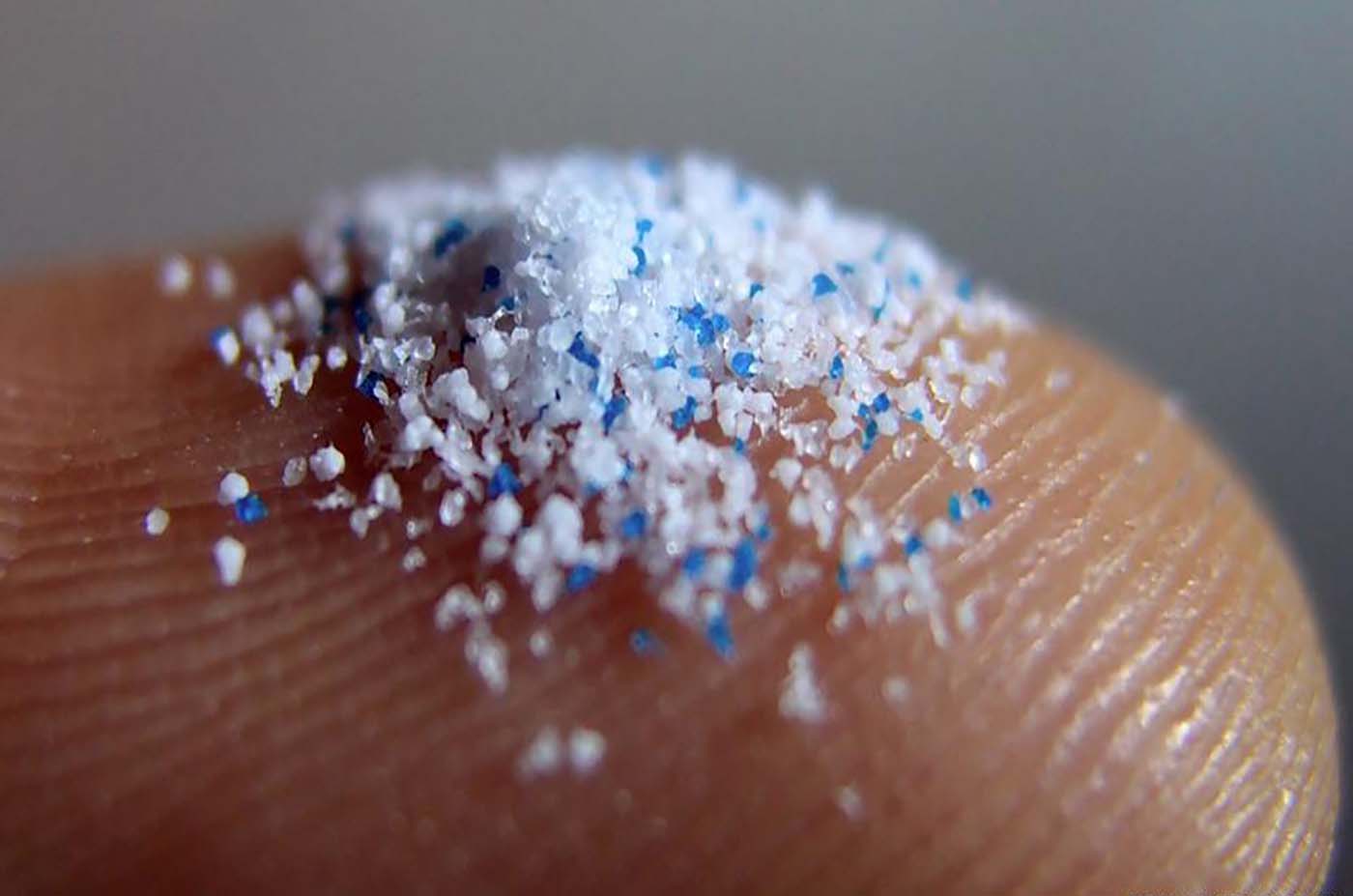
Plastic does not fully degrade. Large pieces of plastic can exist in the environment for decades, and even centuries. Animals can choke on or ingest these plastic items. This can cause health issues such as malnourishment, problems digesting food, or even death. Plastic has a long lifespan and rather than degrading, it simply breaks down into little pieces called microplastics (any plastic less than 5 millimeters in length). Microplastics may be tiny, but they pose a huge threat to marine life and even our own health. They are so small they can easily pass through water filtration systems into our waterways and be ingested by aquatic animals of all sizes. Humans can also ingest microplastics through the food we eat and they can potentially pose a serious healthy risk because of the toxic chemicals present in plastic. More research needs to be done to determine what effects ingesting microplastic can have on marine life and human health, but PCB’s (polychlorinated bi-phenyls) are a type of chemical found in many plastics and have been linked to cancer, weakened immune systems, and reproductive problems.

Should We Be Concerned About Microplastics? | AVADA Environmental
Microplastic pieces (source: https://avadaenvironmental.com/2019/04/18/microplastics/)

Because our dependence on disposable plastics has increased since the pandemic began, more plastic is being dumped into our rivers and oceans and not being disposed of properly. Many countries have already recorded an increase in plastic litter on shorelines and in the water, specifically medical masks and gloves.

What can I do?

Wear your masks whether they are reusable or desposable. Wash your hands. Continue following CDC guidelines. Doing your part to flatten the curve and protect those around you is the most important thing you can do right now to slow down the infection rate. But then dispose of your mask properly and make sure others do the same to reduce the amount of plastic litter that gets into our environment.

Find other ways to cut down on plastic use:

  • Use reusable containers instead of single use plastic bags
  • Use reusable silverware when eating takeout and refuse plastic utensils
  • Use reusable water bottles and coffee mugs (this also saves money!)
  • Once it is safe, use cloth grocery and produce bags
  • Cook at home—fast food restaurants use a ton of plastic
  • A lot of everyday items like ballpoint pens and mechanical pencils have non-plastic alternatives
  • When possible buy fresh fruits and vegetables over frozen, packaged, and bottled alternatives
  • Limit how many items you purchase online because they often include excess plastic packaging
  • When shopping in stores ask the cashier to not use a plastic bag if you are capable of carrying items without it
  • Recycle recycle recycle! Although this is not a permanent solution, it can help reduce plastic waste and production.
  • Sustainably shop for clothes. Many materials such as polyester and nylon contain plastic and the fast fashion industry is one of the leading contributors to climate change.
  • Donate old items such as clothing you do not need, and also shop in second hand stores.
  • Check your cleaning and cosmetic products to make sure they do not contain mircobeads (manufactured plastic beads found in exfoliating products)

And in case I didn’t emphasize it enough, WEAR YOUR MASK!

Further reading:

https://www.washingtonpost.com/health/youre-literally-eating-microplastics-how-you-can-cut-down-exposure-to-them/2019/10/04/22ebdfb6-e17a-11e9-8dc8-498eabc129a0_story.html