I can’t believe it is the middle of March already! This post is inspired by a presentation I prepared, but unfortunately did not have the chance to give, last year due to the Covid-19 pandemic. In my presentation, I was hoping to tell the stories of women in STEM that have often been overshadowed by their white counterparts whose stories are sensationalized by mainstream media. When you think of women who have gained fame through their science or environmental activism, the most common household names are Rachel Carson, Marie Curie, Jane Goodall, and most recently Greta Thunberg. (Disclaimer: This is not meant to bash any of the women mentioned previously, their work was very important! I am a scientist today because I absolutely worshipped my Jane Goodall VHS tapes.) The women who are missing from this narrative are the BIPOC women whose work also deserve to be celebrated, a few of which I will highlight here. The women I will be discussing in this post I chose because they have been inspirations to me personally and their work intersects with my interests. This is by no means meant to be an extensive list.
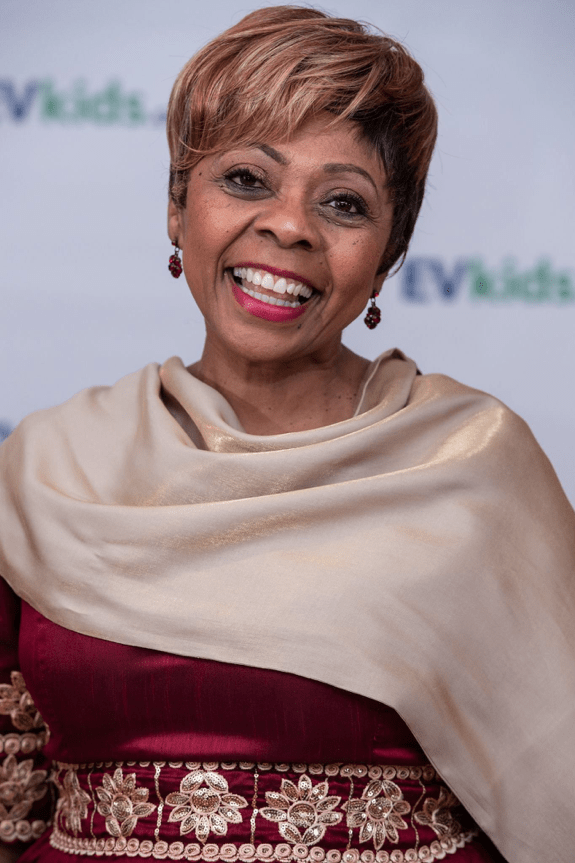
Dr. Mamie Parker
Dr. Mamie Parker is a biologist who has worked in the United States Fish and Wildlife Service for over thirty years. She is a pioneer in her field, and has held many titles within USFWS: Assistant Director of Fisheries and Habitat Conservation, Northeast Service Regional Director, USFWS Chief of Staff and Chief of Fisheries. She has been awarded the Presidential Rank Meritorious Service Award, and the Emmeline Moore Prize from the American Fisheries Society. She has dedicated her career to conservation, and also promoting greater diversity and inclusion in fisheries science.
Now retired, she is still inspiring others through public speaking and mentorship. I first learned about Dr. Parker just last month when I was attending the University of Washington’s School of Aquatic and Fisheries Science prospective student day (virtually). After being interested in fisheries management and promoting diversity in STEM for so long, I was shocked that I had never even heard of her before. I am so honored to be able to attend her talk and learn from her experiences in fisheries science. Her speech was so moving as she discussed her career path, and also the aspects of her life that she sacrificed for her career. It was very inspiring to hear her story, and also encouraging to be told from somebody as monumental as her the importance of a work-life balance. Dr. Parker does not get nearly as much recognition as she deserves for her dedication to the field of fisheries science and conservation.
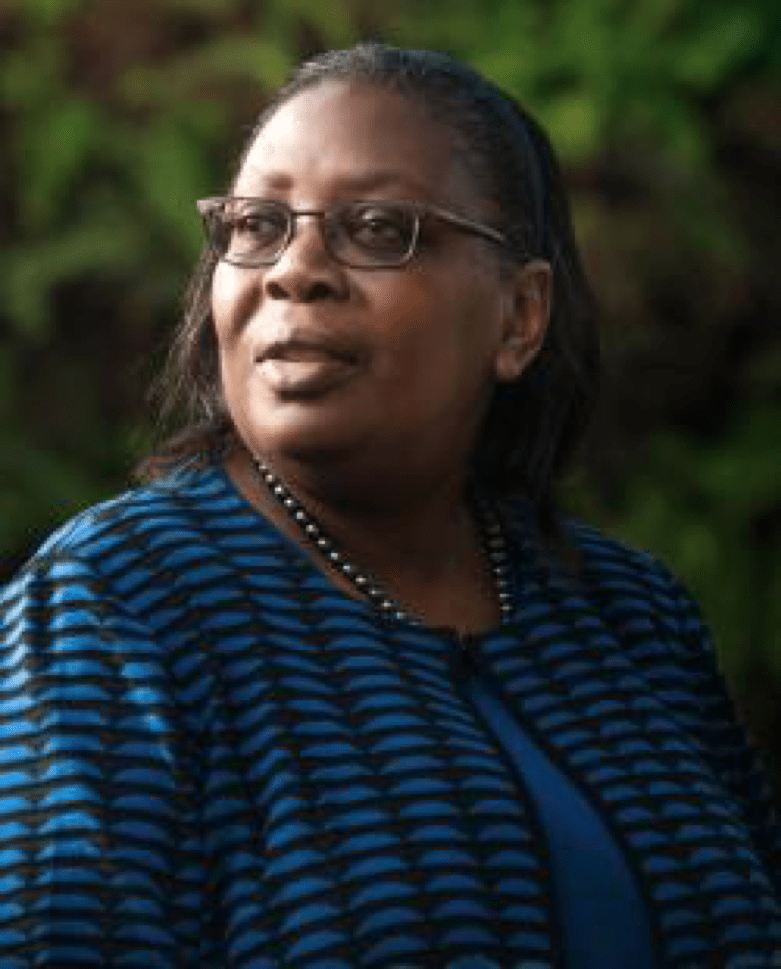
Dr. Dorceta Taylor
Dr. Taylor is an environmental sociologist who has studied and written about a wide array of topics such as environmental racism, environmental justice, environmental policy, food insecurity, environmental privilege, and the intersections of race and gender in the environment. She is currently the Director of Diversity, Equity, and Inclusion at the University of Michigan’s School of Environment and Sustainability. Like Mamie Parker, Dorceta Taylor has also been a champion for promoting greater diversity in environmental fields. Dr. Taylor has written a series of three books about environmental racism, justice, and policy: The Rise of the American Conservation Movement: Power, Privilege, and Environmental Protection, Toxic Communities: Environmental Racism, Industrial Pollution, and Residential Mobility and The Environment and the People in American Cities, 1600s-1900s: Disorder, Inequality and Social Change.
Dr. Taylor is another unsung hero that I only recently discovered through social media. I wish I had learned about her sooner because her work has been extremely influential to my ways of thinking about human relationships to the environment, and I could have benefitted greatly from reading her work during my undergraduate years. Better late than never! I have read The Rise of the American Conservation Movement and am about to begin Toxic Communities. I hope to cover all three of her books in greater detail on this blog very soon because I think all of them have so much to offer and deserve recognition for their importance to the field of environmental sociology. In my opinion, they should be required reading for all students in environmental fields!

Winona LaDuke
Winona LaDuke is an Anishinaabe environmental activist known for her work on sustainability and food sovereignty. She has been involved in numerous projects and movements such as the White Earth Land Recovery Project, which focuses on reclaiming both land and traditional relationships with the land such as harvesting wild rice and other traditional foods, and revitalizing culture and language. LaDuke also founded Honor the Earth to promote Indigenous environmental movements working to address environmental justice issues such as climate change, the construction of pipelines including the Dakota Access Pipeline, renewable energy, and sustainable development.
I had the honor of meeting Winona LaDuke and hearing her speak a few years ago on my college campus. I was a terrified sophomore walking into a room to have lunch with probably one of the most powerful people I have ever and will ever meet (plus about twenty professors and graduate students, which made for not an intimidating situation at all!). I was so star struck I completely forgot to introduce myself, but that’s okay. It is alright to be a little socially awkward.

Madonna Thunderhawk
Madonna Thunderhawk is another amazing Indigenous civil rights activist that has dedicated her life to being a leader in the American Indian Movement, the Dakota Access Pipeline resistance, and organizing Women of All Red Nations, The Black Hills Alliance, and the Lakota People’s Law Project. She was involved in the occupation of Alcatraz Island and the occupation of Wounded Knee (please look both of these movements up if you haven’t heard of it, it is some pretty cool history that is not taught in the classroom), as well as two occupations of Mount Rushmore to protest the 1868 Treaty of Fort Laramie. In addition to her grassroots activism, Thunderhawk has done a lot of work with revitalizing culture through traditional education.
Thunderhawk is a champion for Indigenous rights, and specifically Indigenous women’s rights. I had the honor of meeting her two years ago as a part of an event I helped to organize. She and her daughter came to OSU for a screening of the documentary about her life and work called Warrior Woman. Afterwards they held a Q&A and Thunderhawk was so great to listen to. Her advice and answers to all of the questions were so powerful, I learned more from that thirty-minute Q&A than any Native American history class. I was so fortunate to have met her, and believe that she deserves more recognition for her role in Indigenous civil rights movements. Any discussions about the American Indian Movement is so male-dominated, but women such as Thunderhawk played a very important role as well, if not more so important.

Autumn Peltier
Autumn Peltier is an Indigenous (Anishinaabe) youth activist and water defender. She advocates for clean drinking water for First Nations peoples in Canada. In 2019 she was name Chief Water Commissioner for her tribe, and has continued her advocacy efforts throughout the Covid-19 pandemic, highlighting the ways the pandemic has further amplified the water crisis in First Nations communities.
“We can’t eat money or drink oil” – Autumn Peltier

Tokata Iron Eyes
Tokata Iron Eyes is another inspiring youth activist from the Standing Rock Sioux Tribe. She is most known for leading the Rezpect our Water campaign against the Dakota Access Pipeline, and has also participated in climate change rallies and movements. I look forward to seeing what comes next in both her and Autumn Peltier’s journeys in advocating for environmental justice.
I wanted to highlight two Indigenous youths, and I wish I could highlight so many other Black and Latinx youths fighting for environmental justice and their futures, because the common narrative of youths in environmental spaces is focused solely on Greta Thunberg, but she is not alone in the fight.
 Learning How to Science